HEPA Filtration: What Makes It Different from Regular Filters?

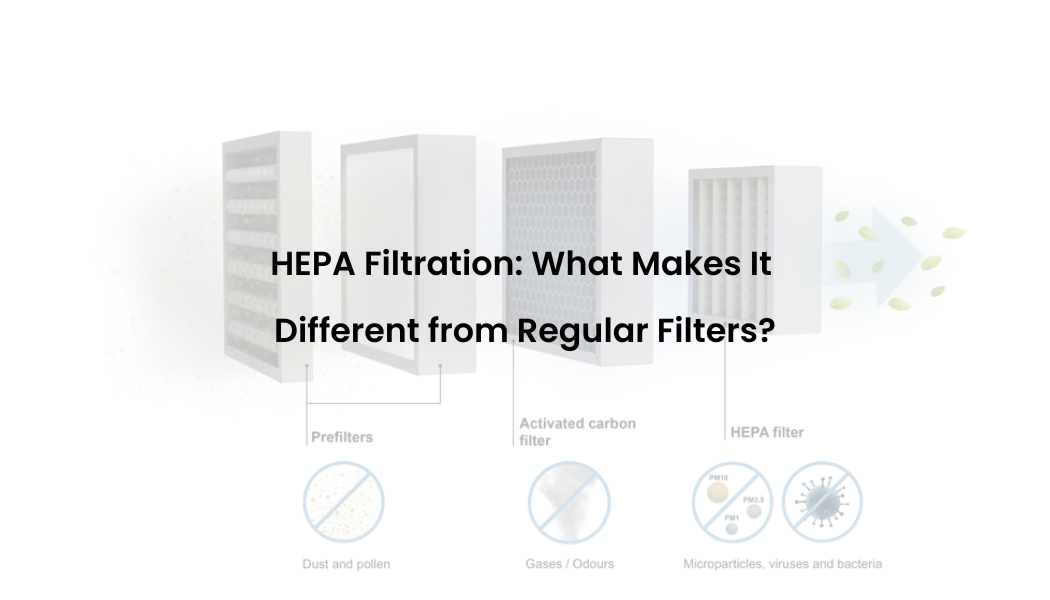
High-Efficiency Particulate Air filter, also known as HEPA filter, is a type of pleated mechanical air filter that is widely used in air purifiers. This type of air filter can remove at least 99.97% of dust, pollen and other air bone particles down to 0.3 microns.
HEPA filters have three key mechanisms, interception, impaction and diffusion. As air flows through the filter media, larger particles are captured by interception. These particles include dust and pollen. They attach themselves to the filter fibers after colliding with them. Impaction catches smaller particles, causing them to embed directly into the fiber network due to their inertia. The smallest particles, such as viruses, are captured through diffusion. This process involves the random motion of particles trapped within a dense fibrous network.
HEPA Filter Performance Grade
Each HEPA filter is EN 1922 certified, which refer the filters able to remove up to 99.95% of fine particles that cannot be seen by naked eyes. HEPA filters are graded based on each efficiency, typically ranging from H10 to H14
- H10/E10: 85% efficiency
- H11/E11: 95% efficiency
- H12/E12: 99.5% efficiency
- H13: 99.95% efficiency
- H14: 99.995% efficiency
H10 to H12 filter also known as EPA filter, Efficiency Particulate Air filter that is used in vacuums and air purifiers to trap small particles, allergens and dust. They are slightly less efficient than HEPA filters (H13-H14), which offer more than 99.95% efficiency.
H13 filter is a medical grade filter that can be used in hospitals and allergy relief. It can catch up to 99.95% while maintaining good airflow. H14 filter is ideal for high-risk areas like operating rooms, laboratories and specialized environments. For most residential settings, an H13 filter offers an optimal balance between filtration efficiency and airflow performance.
What HEPA Filters Can and Cannot Do?
While HEPA filters are highly effective at removing airborne particles, they are often misunderstood. Knowing their capabilities and limitations helps users make better decisions when choosing an air purifier.
What HEPA filters can remove:
- Fine particulate matter such as PM2.5 and PM10
- Dust, pollen, pet dander, and mold spores
- Bacteria and some viruses (especially when attached to larger particles)
What HEPA filters cannot remove:
- Odors from smoke, cooking, or pets
- Gases and chemical pollutants such as formaldehyde and VOCs
- Carbon monoxide or other harmful gases
Because of these limitations, HEPA filters are commonly paired with activated carbon filters to improve overall air purification performance, especially for odor and gas removal.
Proper maintenance of HEPA filters is paramount to maintaining efficient air purification performance. Although HEPA filters deliver exceptional performance, they have a limited design lifespan. The frequency of replacement depends on the operating environment and air quality, with most filters requiring replacement every 6 to 12 months. Regular replacement of the filters ensures that the equipment operates at peak efficiency, protects the air purification system, and maintains a consistently clean and healthy indoor environment.
📢 Our Upholstery Cleaning Service uses HEPA-filter–equipped equipment to ensure cleaner surfaces and improved indoor air quality. Schedule your sofa or mattress cleaning with Bon Maintenance today and feel the difference.
Customer satisfaction is our priority, and we strive to exceed expectations through open communication and personalized experiences.