
Many people will choose their air conditioner based on a combination of cooling capacity, energy efficiency, budget, and noise reduction. Understanding different types of air conditioner will help residents make better decisions.
1. Window Air Conditioner
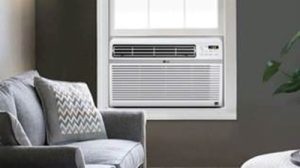
Window air conditioners are self-contained units designed to be installed in a window. The design of the system includes an exhaust system that emits hot air from the back and sides and a cooling system that directs cold air indoors. They are usually designed to plug into a standard household electric socket.
Pros:
- Affordable: The purchase and installation costs are lower than those of a central air conditioner.
- Easy to Install: All the components are housed in a single unit; no separate outdoor condenser is required.
- Save Space: It is installed against the lower half of the window and doesn’t occupy floor space.
- Individual Room Control: Allows precise cooling of specific rooms and is more energy efficient than portable units. It is suitable for small properties like single rooms.
Cons:
- High Operating Noise: The compressor and fan are integrated into one unit, which typically results in higher noise levels than split-type air conditioners.
- Obstructed Views and Natural Light: Installation reduces usable window space and obstructs the view, limits natural light and ventilation.
- Limited Cooling Coverage: Primarily suited for single rooms, unsuitable for multi-zone cooling.
- Installation Restriction: Not all buildings or window types allow for the installation of window air conditioners.
- Less Aesthetic: Bulky and conspicuous units may affect both interior and exterior appearance.
Window air conditioner is one of the ideal types for small room residents, with tight budget and simple cooling needs.
2. Portable Air Conditioner
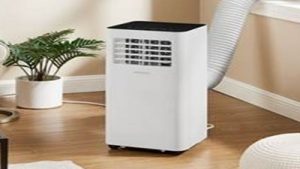
Portable aircond represent one of the finest choices for those seeking flexible and easy-to-install cooling solutions. They draw in warm indoor air, cool it with refrigerant, expel the heat outdoors through an exhaust hose, and recirculate the cooled air back into the room to lower the temperature.
Pros:
- Highly Portable: Compact and lightweight, can be easily moved between rooms using wheels.
- Easy to Install: No professional and permanent installation is required; it can typically set up within minutes using a window vent kit
- Affordable: Lower expense than wall-mounted air conditioning systems.
- Flexibility: Well-suited for renters where permanent, wall-mounted, or window units are not allowed.
Cons:
- High Operating Noise: All the components, including the compressor, are enclosed within the unit. This results in higher noise levels than other types of air conditioning.
- Occupy space: The bulky body reduces available indoor space.
- Lower cooling efficiency: Higher energy consumption with reduced cooling performance compared to other types of air conditioners.
- Ventilation and Maintenance: Hot air still requires an outdoor exhaust, and the water tank may need frequent draining, depending on the model
Portable air conditioners are an ideal solution for renters and short-term use. They offer easy portability and swift installation, though this convenience comes at the expense of cooling capacity and energy efficiency.
3. Wall-mounted Air Conditioner
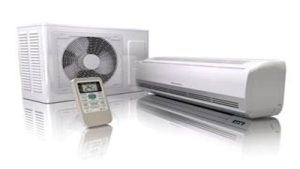
Wall-mounted air conditioners are the most common and popular type of air conditioners in the Malaysia market. The air conditioners are mostly part of ductless split systems that are distributed into two units. An indoor air handler via refrigerant lines that blows cool air and an outdoor compressor that dissipated heat absorbed from inside.
Pros:
- Quiet Operation: Compressor is located outside, making indoor a silent environment
- Higher Efficiency: The air from the air handler enters room directly and hence does not experience energy lost consumption.
- Long Term Savings: The air conditioner equipped with advanced inverter technology that adjusts the cooling power based on users’ demand, resulting in lower electric bills
- Zoning: Control different rooms individually by using the remote control, avoid overheating or overcooling unused space.
Cons:
- Complex Installation: The refrigerant lines need professional technicians to undergo precise sizing and installation.
- High Initial Investment: Cost of purchase and installation is expensive.
4. Cassette Air Conditioner
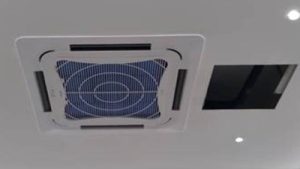
Cassette air conditioners are the most aesthetically pleasing type of air conditioner. They are designed for spaces that require powerful, uniform cooling without sacrificing wall space or interior design.
Pros:
- Higher Efficiency: Most cassette aircond come with energy-efficient inverter technology that controls power usage based on cooling demand.
- Aesthetic: The entire unit is embedded in the ceiling and is suitable for modern interior.
- Quiet Operation: Compressor is separate, creating a silent indoor environment.
- Save Space: It is installed in the ceiling and doesn’t occupy floor space.
Cons:
- Higher Installation Cost: The unit requires professional technician for setup.
- Limited Portability: The unit is permanent once installed.
- High Initial Investment: The cost of purchase and installation is expensive.
- Maintenance Challenges: Fixed installation is difficult to service
Cassette air conditioners are widely used in offices and commercial buildings, but also suitable for contemporary residences with high ceilings. They offer more aesthetically pleasing and cooler environments, though at a higher cost.